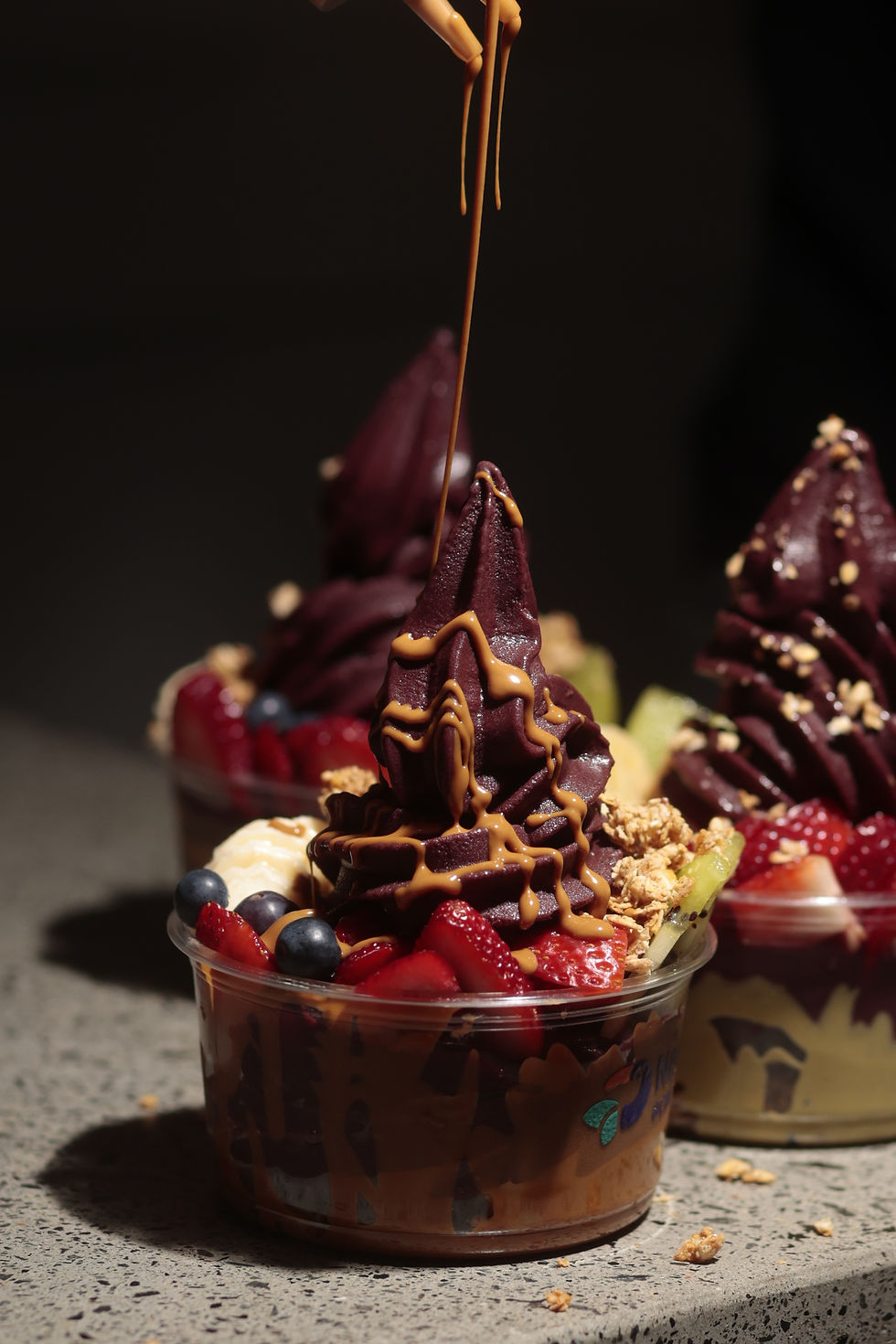
From the Amazon to Australian Cafés: Where Açaí Comes From and What Quality Really Means

Açaí has become a popular ingredient on Australian café menus, appearing in smoothie bowls, smoothies, and frozen desserts. But for business owners considering adding it to their menu, an important question remains: what is açaí pulp, where does it come from, and how can you tell if you are buying a quality product?

Understanding the journey from harvest to freezer helps café owners make informed sourcing decisions, maintain consistent food quality, and choose products suited to commercial service.
1. Where Does Açaí Come From?
Açaí (pronounced ah-sigh-EE) is a small, dark-purple fruit that grows on the açaí palm, scientifically known as Euterpe oleracea. The palm is native to the Amazon region of South America, particularly Brazil, where açaí has long been part of local food culture.
Unlike strawberries or blueberries, açaí berries contain a relatively large seed surrounded by a thin layer of edible pulp. This pulp is the part used to produce the frozen açaí commonly served in Australian cafés.
Açaí palms grow naturally in tropical environments, including the floodplains of the Amazon. Harvesting often involves skilled local workers collecting fruit from tall palms, making the process an important source of income for many Amazonian communities.
For Australian foodservice businesses, understanding this origin is more than an interesting menu story. It provides a starting point for evaluating a supplier's sourcing practices, product traceability and commitment to quality.
Understanding the açaí supply chain, from Brazil to Australia can also help café owners ask better questions about sourcing, handling, and traceability.
2. From Harvest to Freezer: How Açaí Pulp Is Made
Fresh açaí berries are highly perishable, which means they must be handled and processed promptly after harvesting. Unlike fruit that can travel long distances fresh, açaí generally needs to be processed close to its source.
The process typically follows several stages:
Harvesting: Ripe berries are collected from açaí palms and transported to processing facilities. Careful handling helps protect the fruit before processing begins.
Cleaning and preparation: The berries are cleaned to remove unwanted material and prepared for processing.
Pulp extraction: The edible pulp is separated from the hard seed using water and mechanical processing. Depending on the product and production method, the resulting pulp may have different concentrations and textures.
Freezing: The extracted pulp is frozen to help preserve its flavour, colour, and quality during storage and transport.
Packaging and distribution: The frozen product is packed, stored under appropriate temperature conditions, and transported through the supply chain before reaching Australian distributors and foodservice businesses.
Each stage matters. Delays before processing, poor hygiene, or temperature fluctuations can compromise product quality and food safety.
For cafés, the goal is to source frozen açaí that has been processed appropriately, packaged securely, and maintained under a reliable cold chain from production to delivery.
3. What Is Açaí Pulp, and Why Is It Different From Other Formats?
Açaí pulp is the edible portion of the fruit, separated from its seed and processed into a usable food ingredient. When frozen, it becomes a convenient base for businesses that want to prepare bowls and smoothies while controlling their own recipes.
However, not every product marketed as frozen açaí is the same.
Frozen açaí pulp is generally intended for blending. Depending on the variety, it may be unsweetened or combined with ingredients such as guaraná. It allows cafés to adjust sweetness, combine fruits and develop signature recipes.
Scoopable açaí is prepared for serving directly from a freezer. It is designed for convenience and can suit kiosks, takeaway shops, and cafés that want to serve bowls without blending every order.
Machine-ready açaí mix is formulated for compatible commercial soft-serve equipment. Its composition and texture are designed for dispensing, so ordinary frozen pulp should not automatically be treated as a direct substitute.
These differences affect preparation methods, consistency, and service workflow. Before ordering, match the format to your menu, equipment, and kitchen setup.
If you're unsure which format suits your menu, read our guide to choosing the right açaí format for your café.
4. What Defines Quality Frozen Açaí?
A quality product should deliver more than an attractive purple colour. For cafés, quality means the product is suitable for its intended use and performs consistently across orders.
Here are four factors worth evaluating.
Ingredient composition: Check the ingredient list to understand how much açaí the product contains and whether sweeteners, stabilisers, or other ingredients have been added. These ingredients are not automatically undesirable, but they should suit your menu and customer expectations.
Flavour and colour: Açaí has a distinctive earthy, slightly tart flavour. The finished product can vary according to the fruit, pulp concentration, and formulation. Consistent flavour helps customers know what to expect each time they order.
Texture and performance: The right texture depends on the intended application. Blendable pulp should work for your bowl or smoothie recipes, while scoopable products and machine mixes need to perform as designed.
Food safety and handling: Reliable hygiene practices, suitable packaging, documented handling procedures, and an uninterrupted frozen supply chain are essential considerations. Ask suppliers what quality controls and product documentation they can provide.
For a deeper explanation of supplier verification, see The Role of Certifications in Açaí Wholesale: Ensuring Quality and Authenticity.
5. What Do Organic Certifications and Other Quality Claims Mean?
Terms such as organic, sustainably sourced, and ethically harvested can influence customer purchasing decisions. However, businesses should understand what these claims actually mean before using them in their own marketing.
Organic certification relates to compliance with defined production and processing standards. If organic positioning is important to your café, check that the specific product is certified and that the supplier can provide supporting documentation.
For a more detailed explanation, explore our guide to açaí certifications and product quality before assessing supplier claims.
Similarly, sustainability and ethical sourcing claims should be supported by credible information about harvesting practices, suppliers, and traceability. Do not assume that every açaí product is Fair Trade certified or sustainably sourced simply because it originates in the Amazon.
Food safety documentation is another important consideration. Ask about relevant product specifications, allergen information, batch identification, and available testing records.
A trustworthy supplier should be able to explain its quality controls clearly and distinguish verified certifications from general marketing claims.
6. Why Cold-Chain Management Matters in Australia
Once açaí pulp has been frozen, maintaining the appropriate storage and transport conditions is critical. Temperature fluctuations during distribution can affect product quality, while poor handling can introduce food safety risks.
For Australian cafés, food trucks, and kiosks, the supply chain may involve international transport, import handling, local warehousing, and domestic distribution. Every stage needs appropriate temperature management.
When assessing a supplier, ask how frozen products are stored and delivered, what to do if an order arrives in unsuitable condition, and how stock should be handled once it reaches your premises.
Reliable distribution is particularly important for new businesses building a menu around frozen ingredients. Consistent supply helps you maintain the customer experience as demand grows.
7. Choosing the Right Açaí Supplier for Your Café
When you are ready to buy frozen açaí Australia-wide, look beyond product descriptions and compare suppliers on the factors that influence day-to-day service.
Consider whether the supplier can explain the product's origin, provide clear ingredient and handling information, maintain appropriate frozen distribution, and recommend a format compatible with your equipment.
For businesses comparing frozen açaí wholesale options, it is also worth understanding how products are distributed and who to contact if you need assistance with ordering or product suitability.
For businesses that prefer to blend their own recipes, learn more about organic frozen açaí pulp for cafés and juice bars.
Nectar Fruits supplies a range of açaí products for Australian foodservice businesses, including frozen pulp, scoopable products, and machine-ready mixes. The right choice depends on how you intend to prepare and serve açaí.
Ready to explore your options? Visit the Nectar Fruits products page to review the range, or explore açaí wholesale supply for information relevant to cafés and other commercial buyers.
Conclusion
From its origins in the Amazon to its place in an Australian café freezer, açaí passes through several important stages before becoming a bowl or smoothie. Harvesting, prompt processing, freezing, ingredient composition, and cold-chain management all contribute to the final product.
For new café owners, understanding these factors makes it easier to choose the right açaí format, ask better questions of suppliers, and build a menu around consistent quality.
The best starting point is simple: know what you are buying, understand how it should be handled, and work with a supplier that can explain the product behind the label.